
The Regional Street Foods to Get on Your Radar
Street food has always been where some of the most exciting culinary ideas originate. These dishes are often perfected over generations of vendors serving hungry locals on the go.
Today, foodservice operators, grocery perimeter and food manufacturers looking to add energy to menus and product lines are increasingly turning to regional street foods for inspiration. They deliver distinct global perspective and storytelling in approachable formats.
Many of these regional street foods are already big abroad but have yet to show up in U.S. menu tracking data or are still in the early inception stage of U.S. menu presence, offering an early glimpse into dishes that may influence menus next—making them well worth watching.
Here are six street foods worth putting on your radar, each with distinct, on-trend regional ties.
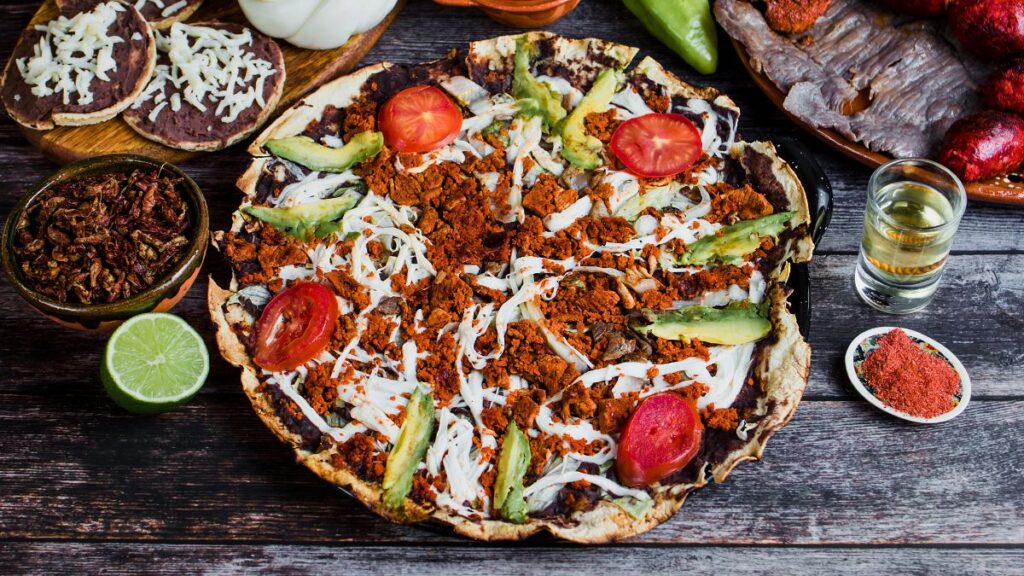
Tlayuda – “Mexican Pizza” from Oaxaca
1. Tlayuda – Mexican Pizza (Oaxaca, Mexico)
For years, street tacos and street corn (elote) have served as the default reference points for Mexican street food. Operators and food manufacturers looking to introduce something new may want to look south to a signature dish of Oaxaca.
Often described as a “Mexican pizza,” a tlayuda is like a cross-over of tacos meets pizza — a large, crisp tortilla layered with refried beans, shredded lettuce or cabbage, cheese and proteins like grilled meats or chorizo. The result is a crunchy, shareable format that’s easy to slice and serve with balanced Latin American flavor.
For menus and product development, tlayudas offer a familiar visual appeal (similar to flatbread or pizza) while introducing a regional Mexican specialty that feels both authentic and new.
Looking to take this dish to the next level? Add bold, roasted pepper Mexican flavor.
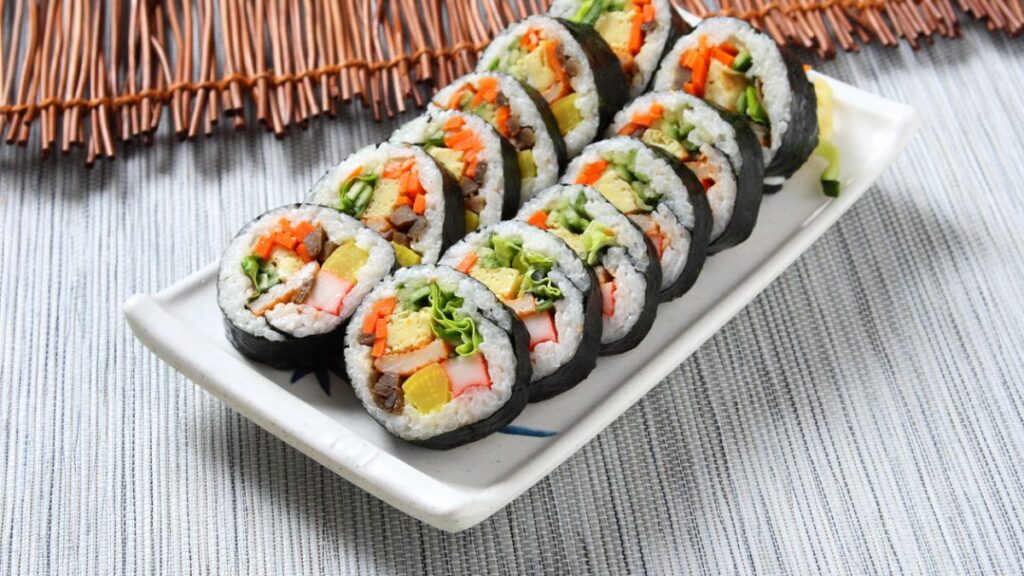
Mayak Gimbap – “Korean Sushi”
2. Mayak Gimbap – Korean Sushi (Seoul, South Korea)
While sushi continues to dominate the global roll category, gimbap (or “kimbap”) offers an unfussy, Korean counterpart.
In Seoul, Mayak Gimbap—literally “addictive gimbap”—is a cult-favorite street snack in Korea. Unlike sushi rice, the short-grain rice used in gimbap is seasoned simply with salt and toasted sesame oil, giving it a savory, nutty character.
The rolls are typically filled with ingredients like pickled radish, egg, carrot and spinach, then sliced into bite-sized pieces perfect for snacking.
For operators and food manufacturers, gimbap presents a familiar roll format with Korean origins—making it ideal for small plates, grab-and-go, appetizers or entree with on-trend Asian flavor appeal.
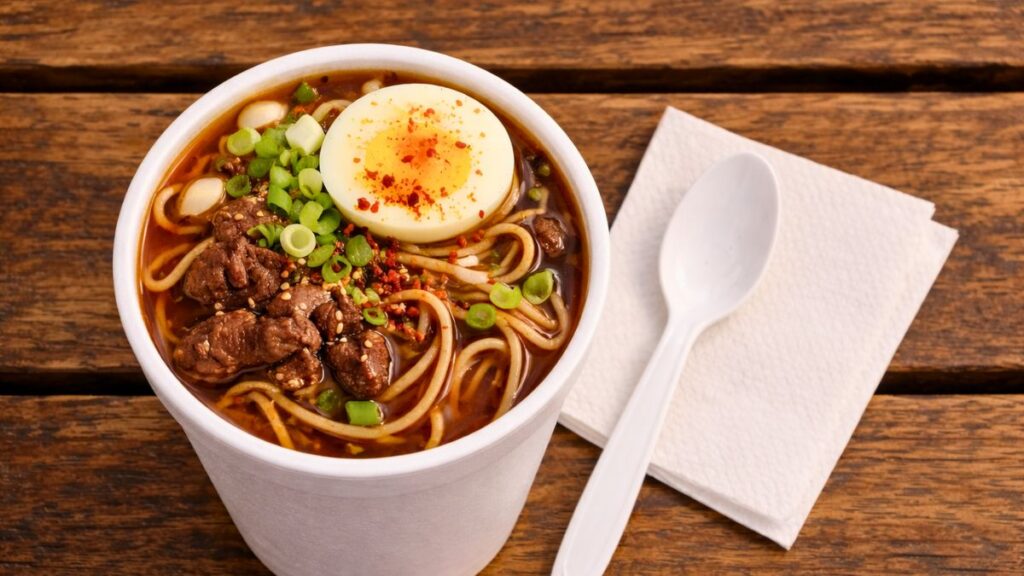
Yakamein – Chinese-Creole Noodles
3. Yakamein – Chinese-Creole Noodles (New Orleans, United States)
Some of the most fascinating street foods emerge from cultural crossovers, and yakamein is the quintessential example.
A New Orleans staple, this dish blends Chinese noodle soup traditions with Creole flavor influences. Typically built with spaghetti noodles, salty beef broth flavored with soy sauce, sliced meat, green onions, and a boiled egg, yakamein is savory and deeply comforting.
Often sold from neighborhood stands and corner stores, it has long been considered a go-to late-night dish in New Orleans.
For menus and product development, yakamein delivers a niche, compelling fusion story while tapping into the enduring appeal of noodle bowls and brothy comfort foods.
Discover dozens of SupHerb Farms® regionally-inspired global culinary products.
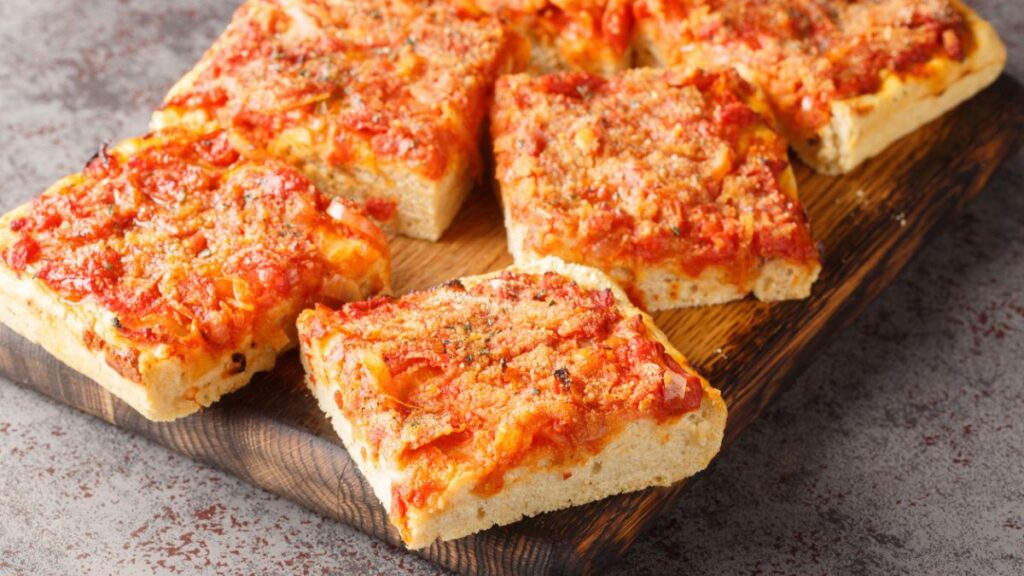
Sfincione – Tomato Bread
4. Sfincione – Tomato Bread (Sicily, Italy)
Not to be confused with Sicilian Pizza, sfincione is a thick, airy bread topped with tomato sauce, onions, anchovies (optional) and breadcrumbs, creating a savory, aromatic bite that’s traditionally sold in street stalls in Palermo and beyond.
To keep this dish authentic, cheese should take a back seat, allowing the tomato and sweet onion flavor to shine—with a minimal dusting of hard cheese (purists insist on southern Italian caciocavallo cheese).
Cut into rectangles or squares, sfincione has the familiarity of pizza and tomato-smeared focaccia bread going for it—not to mention, classic Mediterranean flavor. It works great as an appetizer, shareable or bread-side accompaniment—bringing a distinct, regional Italian flavor to the table, grocery bakery program and retail shelf alike.
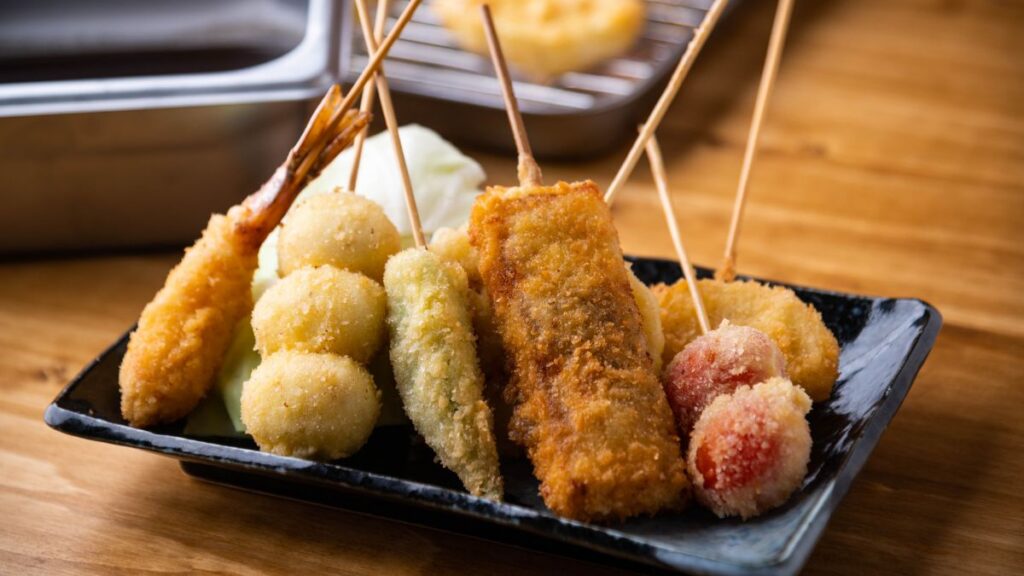
Veggie Kushikatsu – Crunchy Deep-Fried Vegetables
5. Veggie Kushikatsu – Crunchy Deep-Fried Vegetables (Osaka, Japan)
In Osaka, kushikatsu is a beloved Japanese street food centered around skewers of crunchy, breaded and deep-fried ingredients—commonly pork and vegetables (also referred to as “kushiage” as a broader category of deep-fried skewers across Japan).
Unlike tempura’s delicate and airy batter, kushikatsu uses a panko batter that creates an extra-crunchy exterior. While meat and seafood are common, vegetable skewers—such as sweet potato, mushrooms or eggplant—are popular for plant-based eaters, which is the trend we’ve got our eye on.
This format makes kushikatsu particularly appealing for plant-forward menus and product lines seeking global, on-trend offerings. Panko-breaded vegetable skewers deliver satisfying texture while remaining easy to scale—upgrade this item with a spicy sambal-mayo dipping sauce!
Tapping into consumer familiarity of tempura-battered vegetables, kushikatsu offers a crunchy, slightly unique twist as a regional Japanese street food. For operators and food manufacturers, kushikatsu provides a craveable platform with on-trend Asian flavor, that fits seamlessly into appetizer, late-night menu-part or snack categories—and the growing “appetizer sampler” format.
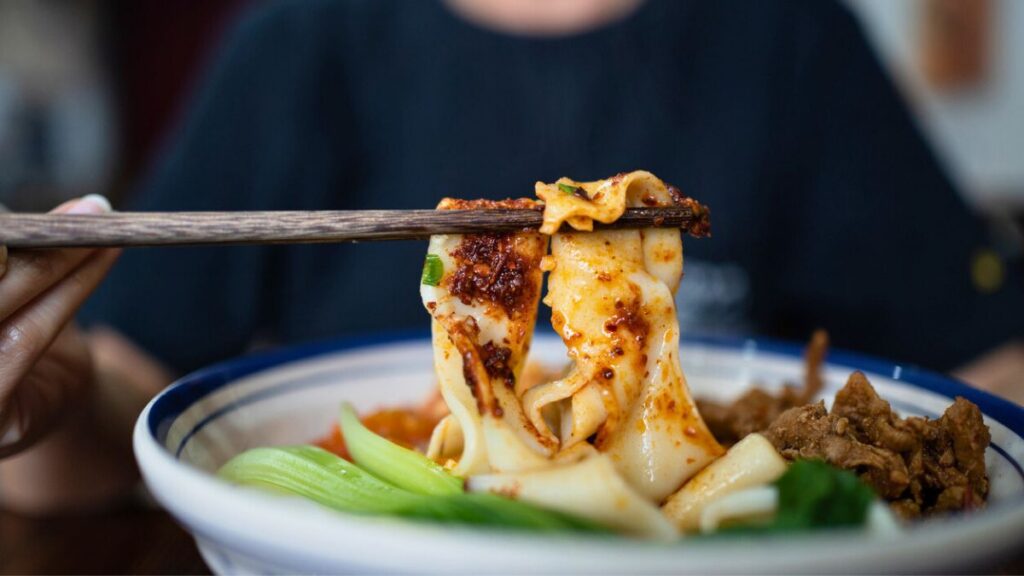
Biang Biang Noodles
6. Biang Biang Noodles (Shaanxi, China)
Originating from food stalls in China’s Shaanxi province, biang biang noodles are instantly recognizable for their wide, hand-pulled ribbons.
The name itself comes from the sound of dough being slapped against a counter during the noodle-stretching process. Once cooked, the noodles are typically tossed with chili oil, garlic, vinegar and aromatics, creating a bold, spicy and aromatic dish.
Their dramatic width and chewy texture set them apart from more familiar noodle styles, making them visually striking and highly craveworthy.
For menus and food manufacturers, biang biang noodles bring distinct regional appeal to well-loved Chinese noodle category.
Why Regional Street Foods Matter Now
As diners become more globally curious, menus are evolving beyond broad cuisine categories toward specific regional specialties. Tapping into regional street foods offers a way to introduce global flavors while staying rooted in dishes that have already proven their popularity where they originate.
SupHerb Farms is your partner in innovation to help you bring regional trends and street foods to life with flavorful, globally inspired culinary ingredients. Explore our diverse portfolio of global ingredients or get inspired with more global menu and product ideas.